Reformer Flow: reformer pilates for every level
Reformer Flow is a 50-minute reformer class at a flowing pace, focused on breathing, spinal mobility and deep core muscles. It is our format for first-timers — we set the springs to support the movement, and the instructor shows every exercise from the basics.
- Level
- Beginner
- Length
- 50 min
- Equipment
- Reformer
- Who it’s for
- For your first class and regular training
See the timetable and bookSee class packsFree to start
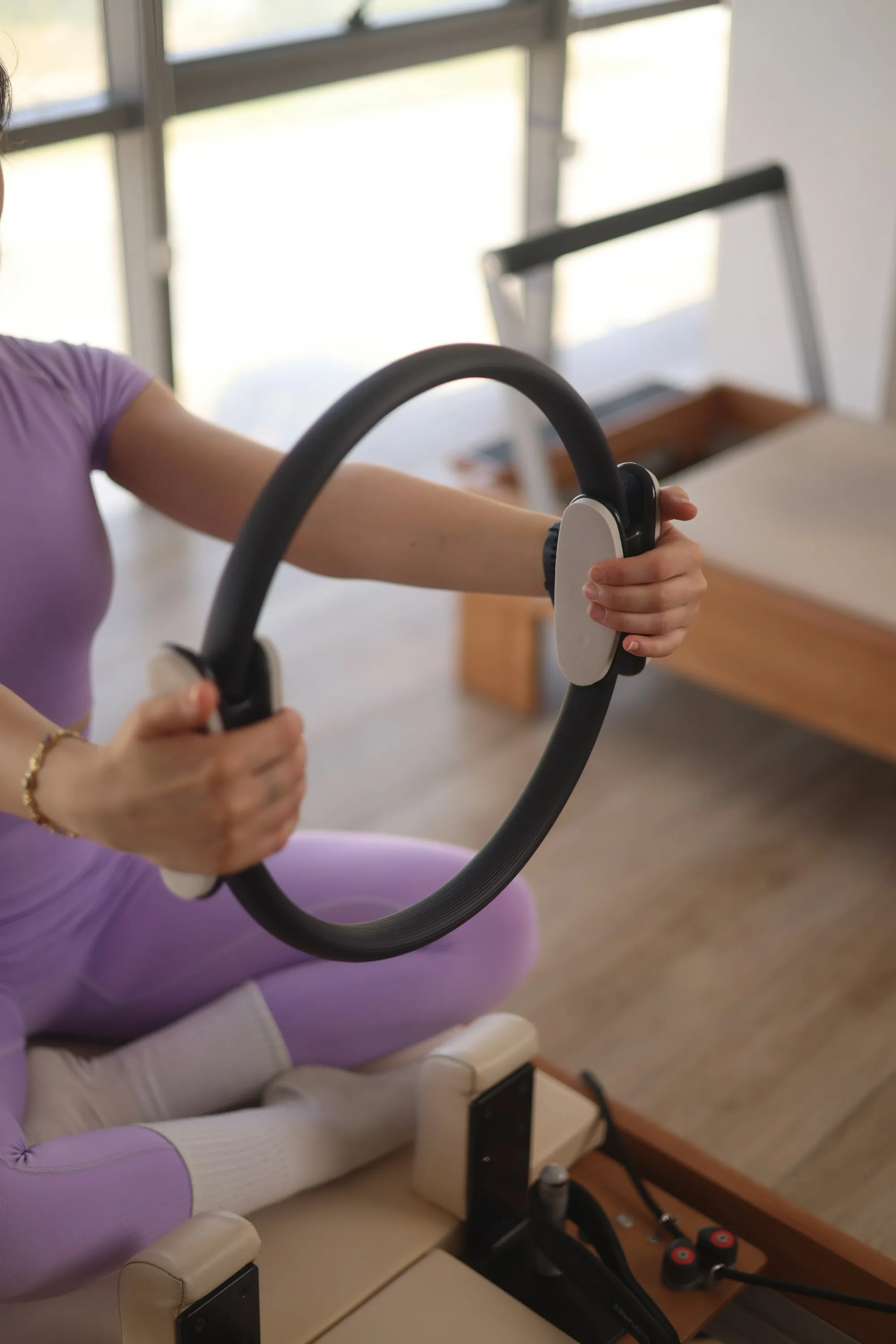
What the class is
Flow is the foundation of reformer pilates. Exercises run into one another without long pauses, and each one starts with setting your pelvis, ribs and breath.
You work lying down, sitting and kneeling, with your feet on the footbar, in the straps and with your hands in the handles. The pace is calm, so you have time to feel which muscles are working.
How a class runs
- Set-up and breathingA few minutes to choose springs and headrest position, lateral breathing and setting the pelvis in neutral.
- Footwork on the barClassic footwork: warms up the legs and teaches you to control the carriage while keeping your trunk stable.
- Spine and coreRolling the spine down and up, abdominal and back work in different positions — in a flowing sequence.
- Arms and rotationStrap work sitting and kneeling, trunk rotations and shoulder-blade work.
- StretchA calm lengthening of the back of the body, hips and chest, then back to the breath.
What makes it different
- The most explanation during class: the instructor shows how to set the springs and corrects your alignment.
- A flowing pace instead of timed sets — the movement is controlled from start to finish.
- One of the two formats you can try for free the first time.
Who it suits
A good choice if
- it’s your first reformer class, or you’re coming back after a long break,
- you want to improve spinal mobility and posture after days at a desk,
- you’re looking for regular training 2–3 times a week without jumping or heavy weights,
- you play another sport and want to add deep core work to it.
Choose another format or talk to your doctor first if
- you have a recent injury or acute pain, or have recently had surgery — get your doctor’s or physiotherapist’s consent first,
- you’re pregnant — choose Prenatal Reformer,
- you’ve trained on the reformer for a long time and want a hard workout — try Reformer Sculpt.
What regular training gives you
- Deep core muscles
- The exercises teach you to stabilise your trunk with your breath and abdominals, which helps in every other kind of movement.
- Spinal mobility
- Flexion, lengthening and rotation in a controlled range, supported by the springs.
- Body awareness
- You learn how to set your pelvis and shoulder blades — which is then easier to carry over to the gym or running.
- No jumping
- The spring sets the load, so the training is gentle on your joints.
Your first class
- Arrive 10 minutes early — we’ll show you how to set up the reformer.
- Wear close-fitting clothes; grip socks are required (you can buy them at reception).
- Tell your instructor about any injuries, pain or pregnancy.
- Avoid a big meal just before class; bring water.
Frequently asked questions
Is Reformer Flow suitable for a first class?
Yes, it’s our main format for beginners. We set the springs to support the movement, and the instructor explains every exercise. Your first Flow class is free.
Will I be very tired?
Flow is moderate effort — your muscles work, but the pace leaves time to breathe. The intensity grows with you, because the spring resistance can be increased.
How is Flow different from Reformer Sculpt?
Flow is a flowing sequence for every level, with the emphasis on mobility and control. Sculpt has more resistance and fewer pauses and focuses on strength — we recommend it after a few Flow classes.
How many people are in a class?
Up to 12, each on their own reformer. You choose your spot when you book on the timetable.
Who teaches the class?
Usually Ewa Sokołowska, who specialises in first classes and calmly explains how the reformer works.
Next step
Once the reformer movements feel natural, move on to Reformer Sculpt — more resistance and harder strength work.
These descriptions are for information only and are not a substitute for advice from a doctor or physiotherapist. If you have an injury, a chronic condition or are pregnant, check with a specialist first and tell your instructor before the class.